About us
We are the Division of Integrative Fisheries Management (IFishMan) at Humboldt-Universität zu Berlin. We conduct social-ecological research und provide the scientific foundation for sustainable recreational fisheries. More
Film-Porträt des Communicator-Preisträgers 2020 Prof. Dr. Robert Arlinghaus
Wir danken Sterntaucher Filmproduktion, der Deutschen Forschungsgemeinschaft und dem Stifterverband sowie Jörg Schütt, Sven Borstel, Babs Kijewski und den Teammitgliedern von IFishMan für die wunderbare Unterstützung des Filmprojekts und der dahinterliegenden Arbeit.
Eine Übersicht über die Arbeit bei IFishMan
Was wir hier bei IFishMan eigentlich so machen und welche Erkenntnisse bereits gewonnen wurden, fasst dieses Video zusammen. Gemeinsam mit der Praxis forschen und Maßnahmen umzusetzen, ist ein zentraler Punkt in der Arbeit von Prof. Dr. Robert Arlinghaus und dem Team von IFishMan. Video in englischer Sprache.
Peer-reviewed,
A complete otolith-based bomb radiocarbon chronology for the Baltic Sea and its use in the age validation of regional fishes
Published
: 2025
Appeared in
: ICES Journal of Marine Science
BSc thesis,
The effects of size-selective harvesting on hooking-vulnerability and hook-avoidance learning in adult zebrafish (Danio rerio)
Published
: 2025
Appeared in
: Freie Universität Berlin
Study,
The impact of size-selective harvesting on vulnerability towards a continuous trawling-model in zebrafish Danio rerio
Published
: 2025
Appeared in
: Freie Universität Berlin
Feature
News article,
High-Profile Panel at Falling Walls Science Summit 2025 Highlighted Global Role of Science in Sustainability - now online
Published :
Quarry Pond, Quarry Pond, News article,
New Findings from the StörBagger Project: Can Recreation and Biodiversity Coexist?
Published :
Quarry Pond, Quarry Pond, News article,
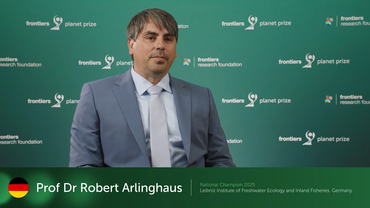
Robert Arlinghaus named Germany’s National Champion in the 2025 Frontiers Planet Prize for his whole-lake BAGGERSEE experiment
Published :
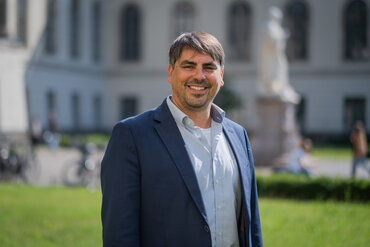
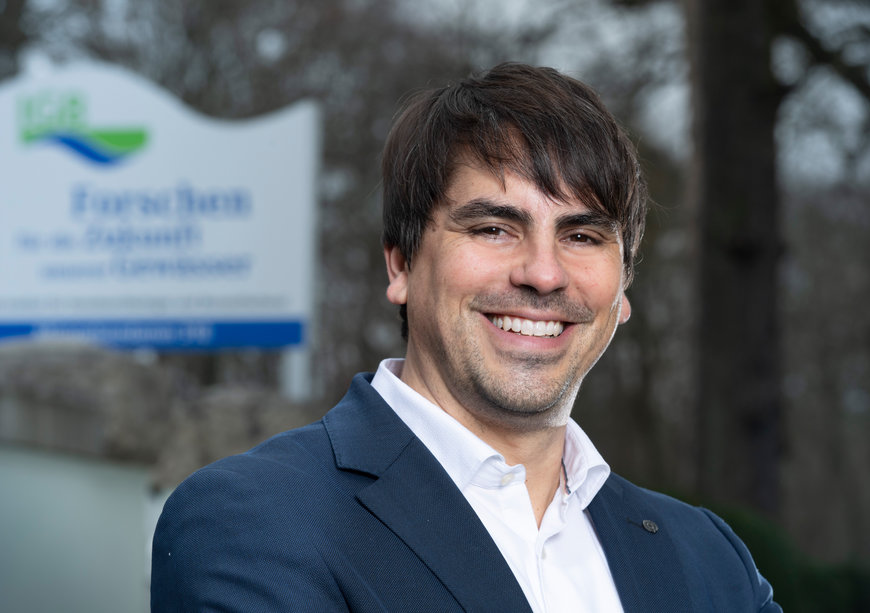
Profil Prof. Dr. Robert Arlinghaus
In my group, we primarily study the social, economic and biological dimensions of angling as a social-ecological system. In addition, I study the ecology and evolution of fish stocks in natural and artificial aquatic ecosystems, with particular emphasis on anthropogenic stressors, e.g. fishing pressure. We pursue a strictly interdisciplinary research approach in which the natural and the social sciences are coupled.